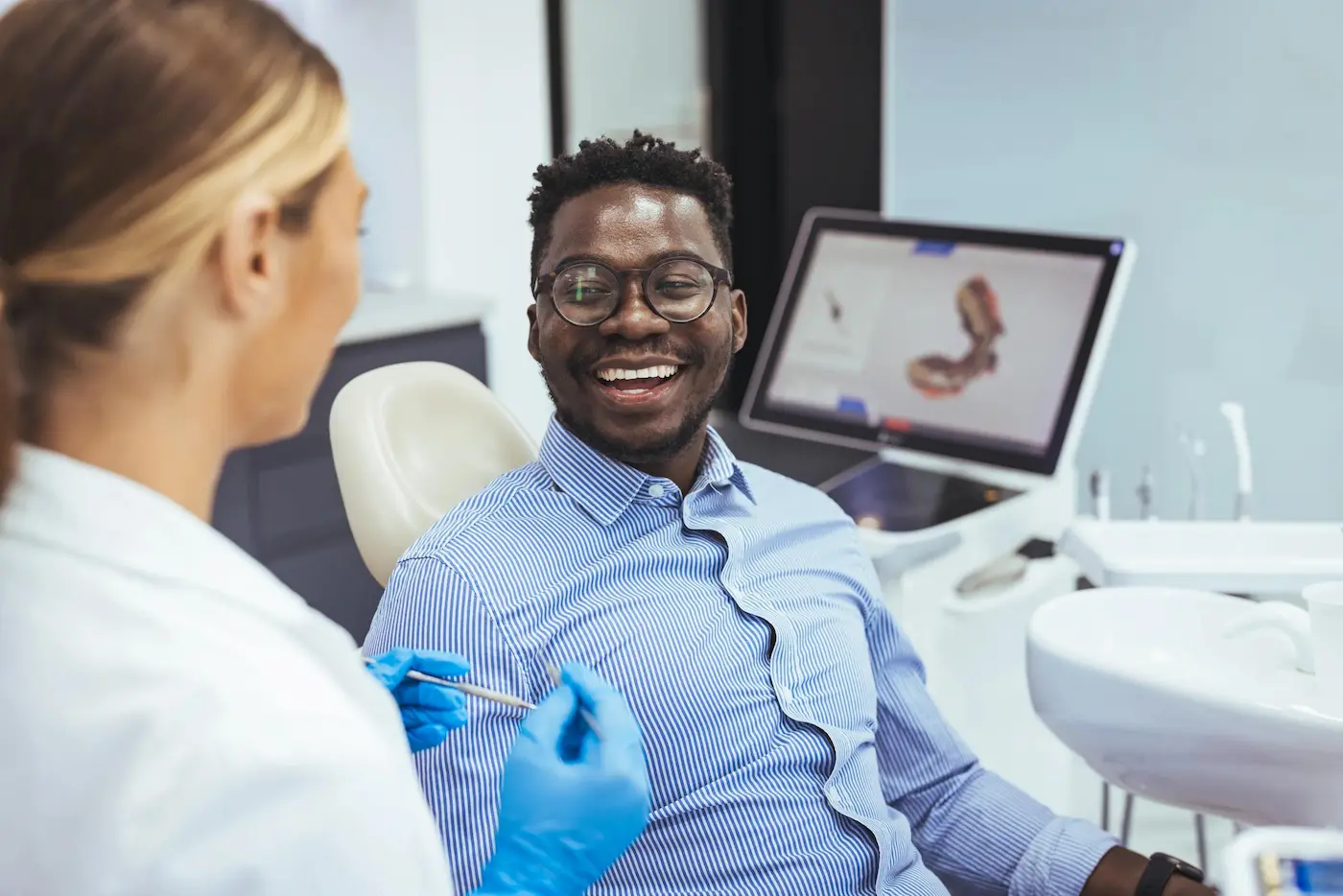
What to Expect at Your First Dental Oncology Consultation
A dental oncology consultation is not a sales pitch. It is a structured evaluation of what your cancer history has done to your mouth and what to do about it.
Bring your treatment records if you have them. Radiation dose maps, chemotherapy summaries, and surgical notes let us plan far more accurately than clinical exam alone.
The visit typically includes a full soft tissue exam, CBCT imaging when relevant, and an honest discussion of timeline, options, and cost. Nothing is decided the same day.
You should leave with a written plan and clear next steps, not a treatment estimate you feel pressured to sign.

Why the First Visit Matters More Than the Second
Most patients arrive at a dental oncology consultation carrying two things: a folder of medical records, and a story about a dentist who told them something unhelpful. Sometimes both are extensive.
The purpose of the first visit is to translate what your body has been through into a specific dental plan. That means understanding what your radiation dose was and where it was delivered, what chemotherapy protocols you received, whether you had surgery near the jaw, and what any of it did to your teeth, bone, salivary function, and soft tissue.
This work is almost never possible in a routine dental appointment. It requires time, specialty knowledge, and access to your oncology records. A good first visit sets up every visit that follows. A rushed or generic first visit sets up problems.
Before You Arrive: What to Bring
The single biggest thing you can do to make the consultation more useful is bring records. Not perfect records. Whatever you have.
- Radiation records if you had radiation. The most useful documents are dose maps and total dose to head and neck sites. Your radiation oncology team can provide these with a records request. If you cannot get them, tell us. We can work from clinical exam and imaging, but the plan will be more conservative.
- Chemotherapy summary listing drugs, dates, and cycles. Bisphosphonates, other bone-modifying agents, and immunotherapy are especially relevant.
- Surgical history from any head, neck, or jaw surgery.
- Recent dental records, X-rays, or scans from your general dentist if available. These save time and money.
- A list of current medications. Some are directly relevant. Others help us anticipate healing and infection risk.
- Your questions. Written down. It is easy to forget them in the moment.
Do not delay booking because you cannot find every record. Come with what you have.
The Clinical Exam and Imaging
The exam is more thorough than a routine dental checkup and looks for things a general dentist may not systematically screen for.
- Soft tissue exam. A careful look at the cheeks, tongue, floor of the mouth, palate, and throat. Cancer survivors are a higher risk group for oral squamous cell carcinoma and for tissue changes that need monitoring.
- Salivary function assessment. A qualitative and sometimes quantitative check of how your saliva is holding up.
- Full charting of teeth, gums, and any existing restorations. Baseline documentation matters. It is what we compare against at future visits.
- Bite and jaw movement. Restricted opening, joint changes, and altered bite are all relevant.
CBCT (cone beam CT) imaging is ordered when we need three-dimensional information about bone, sinuses, or nerve position. Not every patient needs it at the first visit. When it is indicated, we can usually do it on site.
Panoramic and periapical X-rays are common at a first visit if none are recent.
The Conversation That Actually Matters
The exam and imaging tell us what is happening in your mouth. The conversation is where we translate that into decisions.
A useful first-visit conversation covers:
- What your specific risks are, based on your cancer history and current findings.
- What is urgent, what is important, and what can wait.
- What the realistic options are for anything that needs treatment. This often includes options your previous dentist would not have offered because they require dental oncology experience.
- Timelines for each option. Cancer survivor care is often staged over months, not weeks.
- The honest downsides. Every option has trade-offs. We name them.
- Cost ranges. Not final quotes at the first visit, but honest ranges so you can plan.
You should not feel pressured to accept a treatment plan the same day. If a dental office is asking for a large deposit at the end of the first consultation, that is a warning sign in any specialty and especially in this one.
What You Leave With
A well-run first visit sends you home with:
- A written summary of findings.
- A prioritized plan of what to address and in what order.
- Cost ranges for the plan.
- Any interim recommendations you can start immediately: fluoride protocols, hygiene changes, referrals for other specialty input if needed.
- Clear next steps and who to contact between now and the next appointment.
If you leave a consultation confused about what to do next, something went wrong in the visit. Call and ask for clarification. A good dental oncology office wants you to call.
For Traveling Patients
A meaningful portion of our patients travel from other states or from farther away. If you are considering the trip, a few practical points:
- The first consultation can often be done as a single-day visit. We schedule the full workup, exam, and consultation together and provide a written plan before you fly home.
- Video consultations are available for initial conversations, records review, and follow-up discussions once a plan is in place.
- For patients who need surgical care, we coordinate with local dentists in your area for follow-up when appropriate.
- Our travelling patients page covers logistics: recommended lodging, timing suggestions, and how we sequence care to minimize trips.
Frequently Asked Questions
How long does the first visit take?
Plan on 60 to 90 minutes. Longer if we are doing imaging the same day or if your records require detailed review.
Will you take my insurance?
We work with most PPO dental insurance and provide detailed cost breakdowns. Some services in dental oncology are covered under medical rather than dental insurance, and we help you navigate that. Our insurance and financing page has current details.
Do I need a referral from my oncologist?
No. Many patients come on their own. If your oncology team has a referral relationship with us, that is helpful for record sharing, but it is not required.
What if I cannot afford the recommended plan?
We stage care. Almost every plan can be broken into phases, starting with what is most urgent and building from there. We also offer financing options and honest guidance about which parts of a plan can safely wait.
What if I already have a general dentist?
Most of our patients keep their general dentist for routine cleanings and preventive care. We collaborate on the parts of your care that need specialty attention and communicate with your general dentist so nothing falls between the cracks.
Ready When You Are
Booking a dental oncology consultation is often the step that unblocks a plan that has been stalled for months or years. It does not commit you to anything.
Schedule a consultation or call (978) 723-0825. We see patients at four offices and by video for those traveling from farther away.
Speak With a Dental Oncologist
Whether you are weeks into treatment or decades past it