Osteonecrosis of the Jaw (ORN, MRONJ, BRONJ)
Osteonecrosis of the jaw is one of the most serious oral complications of cancer treatment. The term refers to areas of dead bone in the jaw that fail to heal, usually presenting as exposed bone in the mouth that persists for weeks or months.

There are two main forms, both relevant to cancer survivors:
Osteoradionecrosis (ORN): caused by reduced blood flow following head and neck radiation. Can develop spontaneously or following an extraction or trauma, sometimes years after radiation completed.
Medication-related osteonecrosis of the jaw (MRONJ): caused by certain medications, most commonly bisphosphonates (Zometa, Reclast, Aredia, Bonefos) and denosumab (Xgeva, Prolia). When specifically caused by bisphosphonates, sometimes called BRONJ.
Both can be serious, both are manageable in most cases with appropriate care, and both benefit from clinicians who treat them regularly.
Symptoms and Presentation
Osteonecrosis can present in several ways:
- Exposed bone in the mouth: the most characteristic sign, often visible at an extraction site, under a denture, or along the gumline
- Persistent pain in the jaw: sometimes the first symptom before bone becomes visible
- Loose teeth that were previously stable
- Drainage or pus from a site in the mouth
- Non-healing extraction sockets: sites that should have closed but have not
- Numbness in the lower lip or chin (in advanced lower jaw cases)
- Visible separation of bone fragments (sequestrum formation)
- Swelling, redness, or fistula in surrounding tissues
Early-stage disease can be subtle, sometimes just a small area of exposed bone with no pain. Advanced disease can involve large segments of jaw with significant functional impact.
Diagnosis
We diagnose osteonecrosis through:
Detailed history. Cancer treatment history, radiation field and dose, current and prior medications (particularly bisphosphonates and denosumab), recent dental procedures, and timing of symptoms.
Clinical exam. Visual and tactile examination of the affected area, evaluation of surrounding tissues, and assessment of overall oral health.
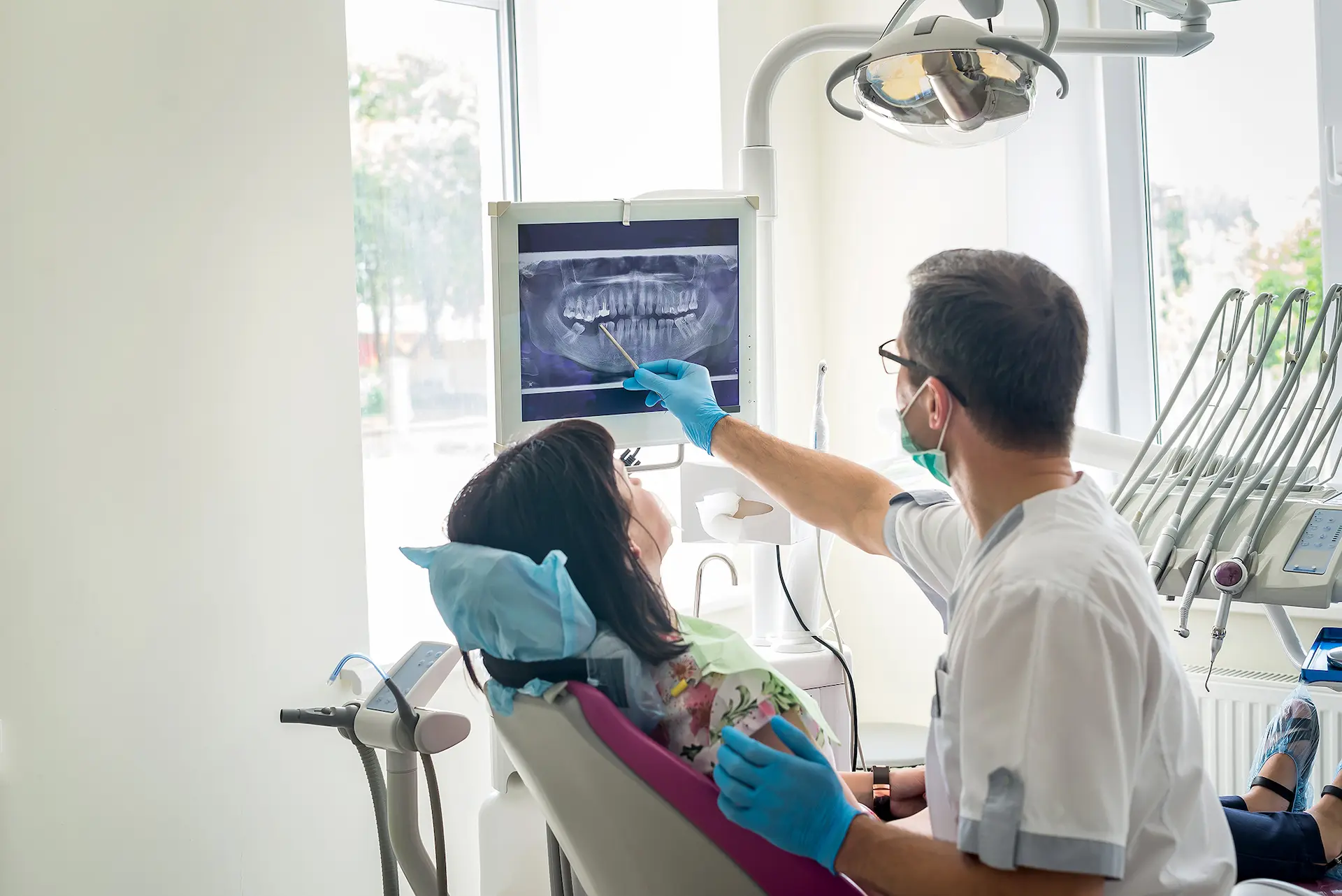
Imaging. Panoramic X-rays, periapical X-rays, and often CBCT (3D cone beam CT) to evaluate the extent of bone involvement.
Staging. Established staging systems for both ORN and MRONJ guide treatment decisions. Stage at diagnosis substantially influences management.
Treatment
Treatment depends on cause, stage, location, and individual factors.
Conservative management is often first-line, particularly for early-stage disease:
- Antimicrobial mouth rinses (typically chlorhexidine)
- Targeted antibiotics when infection is present
- Analgesics for pain control
- Avoidance of mechanical trauma to the affected site
- Removal of small bone sequestra when they have separated naturally
- Frequent monitoring for progression or healing
Many patients stabilize with conservative care, particularly with MRONJ where the medication can sometimes be paused (in coordination with oncology) and with ORN where smaller lesions can resolve over time.
Surgical management is sometimes needed:
- Sequestrectomy (removal of separated bone fragments)
- Debridement of larger areas of dead bone
- Marginal or segmental resection in advanced cases (typically hospital-based, with oral and maxillofacial surgery)
We coordinate with oral surgery for surgical management when needed. Many cases can be handled in our office; advanced cases benefit from hospital-based care.
Hyperbaric oxygen therapy (HBO) is sometimes used as an adjunct, particularly for ORN. Evidence on HBO is mixed; we recommend it for selected cases based on individual circumstances.
Coordination with oncology. For MRONJ patients, we often communicate with the medical oncologist about whether (and how) to modify the bone-modifying drug regimen. Decisions involve weighing dental and oncology priorities.
Prevention
For patients at risk, prevention is more effective than treatment:
Pre-treatment dental clearance. Patients about to begin head and neck radiation, bisphosphonates, denosumab, or anti-angiogenic therapy benefit from a dental evaluation before treatment starts. Hopeless teeth should be addressed before bone-modifying drugs or radiation begin.
Conservative dentistry for at-risk patients. Patients with prior radiation or active bisphosphonate therapy should generally avoid extractions unless necessary. Restorative work, crowns, root canal therapy, often serves better than extraction.
Coordination with the oncology team. For patients on or about to start bone-modifying drugs, dental work should be timed and coordinated.
Education for survivors. Patients should know their risk and tell every dentist about radiation history and bone-modifying drug exposure, even years later. This information is critical and often forgotten.
Working With Your Care Team
Osteonecrosis sits at the boundary of dentistry and medicine, and management often involves:
- Medical oncology, particularly for MRONJ patients on active therapy
- Radiation oncology, for context on prior treatment and risk assessment
- Oral and maxillofacial surgery, for surgical management of advanced cases
- Hyperbaric medicine, when HBO is indicated
- Infectious disease, when secondary infection complicates the picture
We coordinate routinely with these specialists.
Frequently Asked Questions
Will osteonecrosis go away?
Some cases resolve, particularly small lesions managed conservatively. Others stabilize as chronic conditions. A minority progress despite treatment. Outcomes depend heavily on stage, cause, and individual factors.
I am about to start a bisphosphonate. What should I do?
See a dentist before starting, ideally one familiar with MRONJ risk. Have any planned dental work done before therapy begins, particularly extractions. Establish a dental home for ongoing care during therapy.
Can I still have an extraction if I had radiation?
Maybe, with careful planning. Sometimes the risk is acceptable; sometimes a different approach (root canal therapy, monitoring) is better. Get an evaluation before any extraction in radiated bone.
Is osteonecrosis painful?
It can be, but not always. Some patients have significant pain; others have visible bone with little discomfort. Pain control is part of our management.
Will I lose part of my jaw?
Rarely, in the worst cases. Most osteonecrosis can be managed without major resection. We aim for the most conservative effective treatment.
Speak With a Dental Oncologist
Whether you are weeks into treatment or decades past it