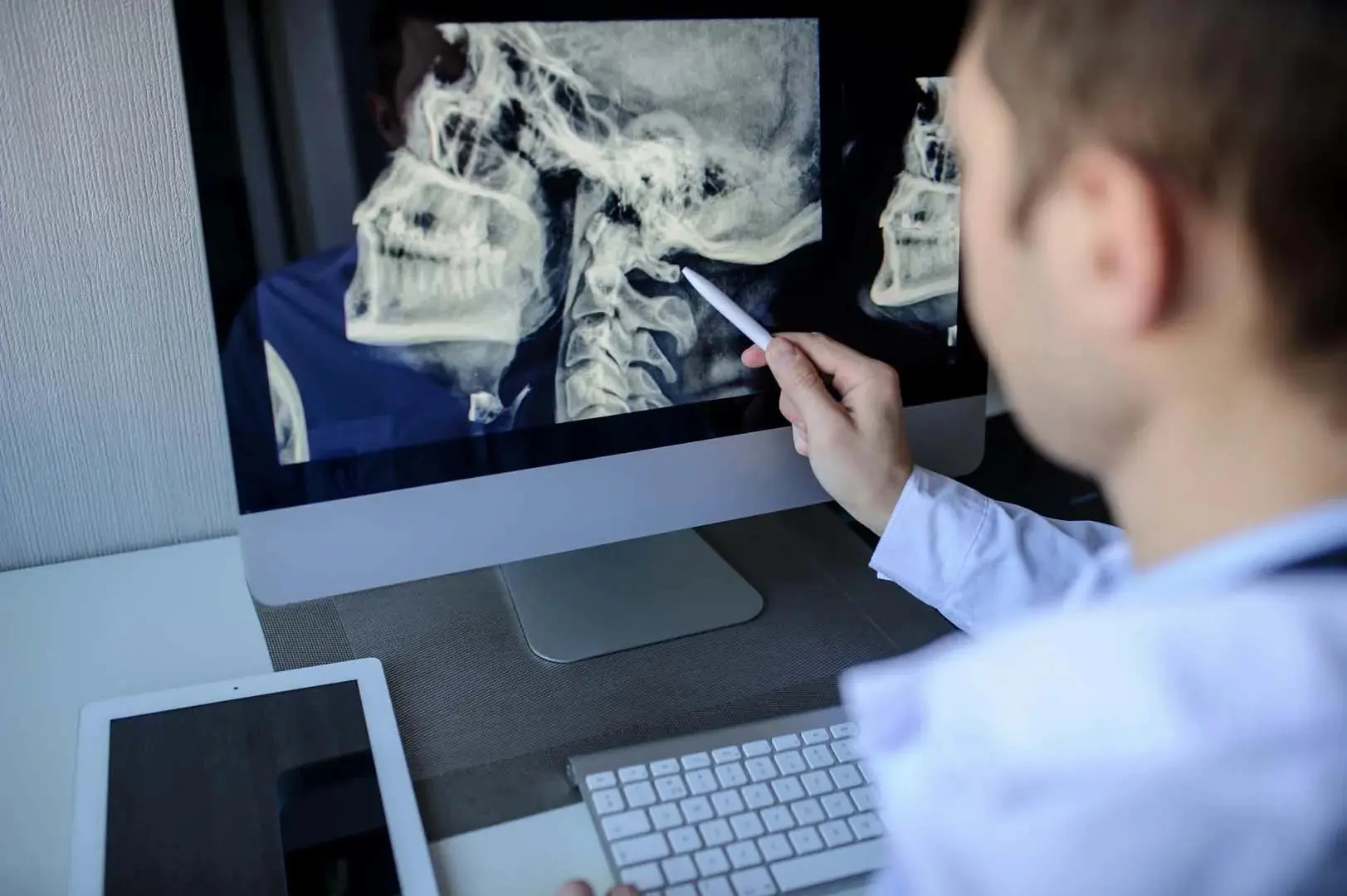
How Head and Neck Radiation Affects the Mouth: A Complete Guide for Survivors
Head and neck radiation affects the mouth in ways that unfold over months and years, not just during treatment.
Some effects, like mucositis, appear immediately and resolve. Others, like xerostomia and radiation caries, develop slowly and can persist for life.
Modern intensity-modulated radiation therapy (IMRT) has reduced the severity of many oral complications, but has not eliminated them.
A dental oncology plan tailored to your radiation dose, sites, and history is the single most effective way to preserve long-term oral health.

Why This Deserves a Complete Guide
Head and neck radiation is one of the most impactful treatments in modern cancer care and also one of the most impactful on the mouth. Survivors are often told, correctly, that treatment will save their life. What they are sometimes not told, or told only briefly, is that the mouth will change in specific ways for years afterward.
Some of these changes are minor and self-limited. Others are lifelong and require ongoing management. Almost all of them are more predictable and more manageable than they feel to the person going through them.
This guide is a starting point. Each major effect below has its own dedicated post with more detail.
What Head and Neck Radiation Actually Targets
Radiation directed at head and neck tumors passes through, or near, several structures that matter to oral health:
- The salivary glands, especially the parotid glands, which produce most of your resting saliva. These are highly sensitive to radiation.
- The oral and pharyngeal mucosa, which turns over rapidly and is easily damaged by radiation.
- The jaw bone, which loses blood supply and remodeling capacity in irradiated fields.
- The muscles of chewing and swallowing, which can develop fibrosis over time.
- The teeth themselves, indirectly, through changes in the oral environment rather than direct radiation damage.
The dose to each of these structures depends on the tumor location, radiation plan, and technique. Two patients with the same total prescribed dose can have very different oral outcomes based on how the dose was delivered.
Immediate Effects: Mucositis and Acute Changes
During and immediately after radiation, most patients experience oral mucositis: painful inflammation and ulceration of the mouth and throat tissues. Mucositis is at its worst in the last weeks of treatment and the first weeks after, and typically resolves within 2 to 4 weeks of finishing radiation.
Acute effects also include altered taste, difficulty swallowing, thick saliva, and increased infection risk. Most of these resolve as tissues heal, though some can persist.
Management during this phase focuses on pain control, infection prevention, nutrition support, and gentle oral hygiene. The dental team works closely with the radiation oncology team during this window.
Weeks and Months After: Xerostomia and Taste Changes
Once acute mucositis resolves, the more chronic effects begin to declare themselves. Xerostomia (dry mouth) is the most common and often the most impactful.
Reduced saliva production is not just uncomfortable. It changes the entire oral environment: pH stays lower, food debris clears more slowly, and the mouth loses its natural buffering capacity. Taste changes, difficulty eating certain foods, and increased cavity risk all follow.
Some salivary function often returns in the months after treatment, especially with modern IMRT that spares part of the salivary glands. Full recovery is uncommon. Meaningful improvement is often possible with time and active management.
Years After: The Long-Term Complications
Three chronic complications deserve particular attention because they can appear years after treatment and can be devastating if not addressed early.
Radiation caries. The aggressive, gumline-focused cavities that develop in the low-saliva post-radiation environment. Standard fillings often fail, teeth can break unexpectedly, and the pattern is easily missed by general dentists. We cover this in depth in our post on radiation caries.
Osteoradionecrosis (ORN). A serious condition where irradiated jaw bone fails to heal after injury or spontaneously. ORN risk climbs with higher radiation doses and can be triggered by extractions or other invasive procedures in the radiated area. Prevention through avoiding at-risk extractions and maintaining excellent oral health is the primary strategy.
Trismus. Progressive restriction of mouth opening from fibrosis of the chewing muscles. Physical therapy, stretching exercises, and specialized devices can help maintain function.
Elevated cancer risk. Head and neck cancer survivors are at higher risk of second primary cancers, particularly in the oral cavity and throat. Regular oral cancer screening by a clinician who understands the pattern is important.
Reconstruction and Restoration in Radiation Survivors
Restoring function and appearance for radiation survivors is different from standard dentistry. Extractions may need to be avoided in favor of endodontic therapy. Implant placement requires careful planning and dose assessment. Full arch reconstruction is possible but requires case-by-case evaluation. We cover the specific questions around implants in our posts on dental implants after radiation and zirconia versus titanium implants for cancer survivors.
What Modern Radiation Does Differently
Intensity-modulated radiation therapy and other modern techniques have significantly reduced the severity of many oral complications compared to older treatment. Parotid-sparing IMRT, in particular, has improved long-term xerostomia outcomes for many patients.
Reduced does not mean eliminated. Even with modern radiation, most head and neck patients still experience some degree of long-term oral change. The magnitude is often smaller and the prognosis better, but the fundamentals of dental oncology surveillance still apply.
What Every Head and Neck Radiation Survivor Should Do
- Establish care with a dentist who understands radiation effects. This is different from finding any dentist. A dental oncology consultation is the right starting place.
- Adopt a custom fluoride protocol. Prescription-strength fluoride in custom trays is one of the most effective preventive measures available.
- Be seen every 3 to 4 months, not every 6, particularly in the first several years after treatment.
- Take dry mouth seriously. Active management with prescription products, xylitol, and hydration matters.
- Address problems early. Small issues in an irradiated mouth are not small for long.
- Keep your radiation records. Dose maps and treatment plans matter for future dental decisions, sometimes decades later.
Frequently Asked Questions
How long after radiation do these effects start?
Immediate effects like mucositis appear during treatment. Xerostomia sets in during treatment and often persists. Radiation caries typically appears 1 to 5 years later. Osteoradionecrosis can occur any time after treatment, especially after a triggering event like an extraction.
Will my mouth ever go back to normal?
Some function usually returns in the months after treatment. Most survivors reach a new baseline that is not the same as their pre-cancer mouth but can still support good quality of life with appropriate care.
How do I know what my radiation dose was?
Your radiation oncology team can provide dose maps and treatment records. Requesting these is worth doing, even years after treatment. They inform many future dental decisions.
Can I still see my regular dentist?
Yes, and most survivors do for routine cleanings. A dental oncologist typically adds specialty oversight rather than replacing your general dentist entirely.
What if I never had any dental problems before cancer?
That is common and does not change the calculus. Radiation changes the oral environment regardless of your prior dental history. Preventive protocols matter for everyone.
Building the Right Plan
If you have had head and neck radiation and want a proper evaluation of your oral health risks and a specific prevention plan, a dental oncology consultation is the right starting place, whether it has been six months or twenty years since treatment.
Schedule a consultation or call (978) 723-0825. We see patients at four offices and by video for those traveling from farther away.
Speak With a Dental Oncologist
Whether you are weeks into treatment or decades past it