Can Cancer Survivors Get Dental Implants After Radiation? What the Evidence Says
Most cancer survivors with a radiation history can get dental implants. The blanket "no" many patients have been given is outdated.
Modern meta-analyses show 5-year implant survival in irradiated jaws of roughly 70 to 95 percent, compared to 95 to 98 percent in non-irradiated bone. A real gap, but far from "impossible."
The four biggest predictors of success are radiation dose to the implant site, time since treatment, implant location (mandible does better than maxilla), and the quality of the planning.
A dental oncologist can assess candidacy in a single consultation, usually with CBCT imaging and a review of your radiation dose maps.

The "No" You Were Given Was Probably Written in 1985
Almost every cancer survivor who asks us about implants has been told no at least once. Usually the reason given is radiation. Sometimes the language is more definitive than it should be: "your bone can't handle it," "you'd risk osteonecrosis," "no surgeon will touch you."
That advice was reasonable thirty years ago. The foundational work on osteoradionecrosis in the 1980s established, correctly, that irradiated bone heals differently. Blood flow is reduced. Cellular turnover slows. Healing is genuinely more fragile.
The leap from "heals differently" to "cannot support implants" was made with limited data, older implant designs, and less refined imaging. Forty years of surgical experience, better materials, and better planning have changed the picture substantially. For most survivors we see today, the honest answer is not "no." It is "yes, with careful planning."
Implant candidacy is one piece of a larger picture. For a full overview of how head and neck radiation affects the mouth over time, see our complete guide for survivors.
What the Current Evidence Actually Shows
Multiple systematic reviews and meta-analyses over the last decade have looked at implant survival in radiated jaws. The numbers vary by study population and radiation dose, but the consistent finding is that implant survival is meaningfully high, not catastrophically low.
Schiegnitz and colleagues (2014) reported implant survival rates ranging from about 74 to 93 percent in irradiated patients. Chambrone and colleagues (2013) found similar figures. More recent studies continue to support the same conclusion: implants placed in irradiated bone, under the right conditions, survive at rates that are lower than in healthy bone but still very much clinically successful.
For comparison, standard implants in non-irradiated bone typically survive at 95 to 98 percent over five years. The gap is real. It also means the odds are in your favor, not against you, when the case is properly selected and planned.
Four Factors That Actually Predict Success
Not every survivor is equally good a candidate for implants. Four variables carry most of the predictive weight.
- Radiation dose to the implant site. Total dose matters, but so does the dose at the specific bone location where the implant will go. Cumulative doses above roughly 50 to 60 Gy at the implant site are where risk climbs meaningfully. Your radiation oncology records usually include dose maps that let us assess this before we plan surgery.
- Time since treatment. Most surgeons wait at least 6 to 12 months after radiation before placing implants. Bone remodels and stabilizes during that window, and complications tend to declare themselves early if they are going to.
- Location in the jaw. Implants in the lower jaw (mandible) generally do better than implants in the upper jaw (maxilla) in irradiated patients. This is one reason we sometimes recommend staged treatment plans that prioritize the mandible first.
- Everything else that would matter for any implant. Smoking, uncontrolled diabetes, poor oral hygiene, and certain medications (bisphosphonates and other bone-modifying agents in particular) all affect outcomes independently of radiation. These are not radiation-specific issues, but they compound the risk.
The Role of Adjunctive Care
Two adjunctive therapies come up often in radiated implant cases.
Hyperbaric oxygen therapy (HBO) has been used for decades to improve tissue oxygenation and healing in radiated sites. The evidence for its benefit in implant patients is mixed. Some studies show meaningful improvement in survival, particularly at higher radiation doses. Others show minimal benefit. We consider HBO on a case-by-case basis rather than as an automatic protocol.
Platelet-rich fibrin (PRF) and related biologics are increasingly used to support healing at surgical sites. The evidence base is younger than for HBO, but early results are promising and the risk profile is favorable.
Neither is a shortcut. Both work best as part of a carefully staged plan.
What a Dental Oncology Consultation Looks Like
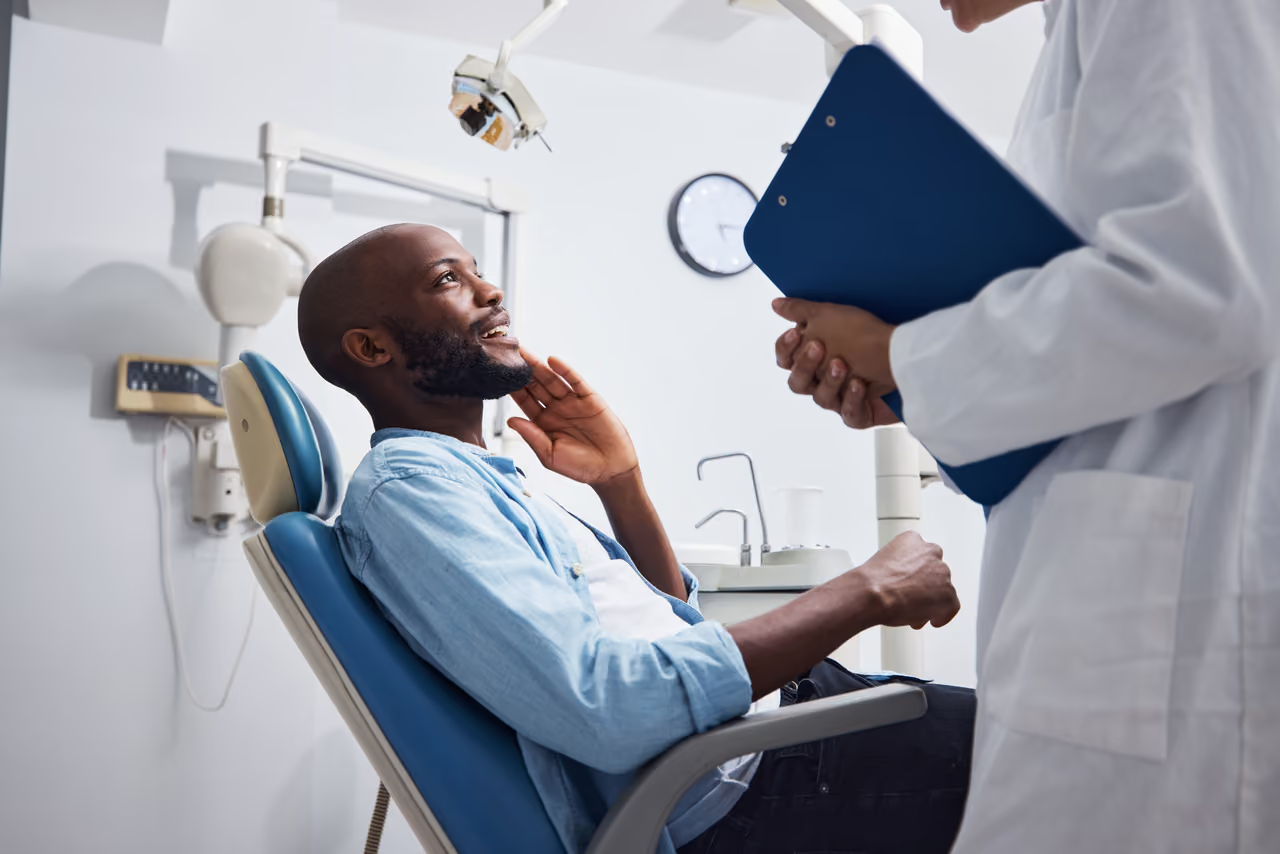
If you are considering implants and have a cancer history, a proper consultation should include a review of your treatment records (chemotherapy regimens, radiation dose maps, any surgeries), a CBCT scan of the jaws to assess bone quality at potential implant sites, a candid discussion of realistic timelines (often 6 to 18 months from consult to final restoration), and a clear conversation about what could go wrong and how likely it is.
You should leave that consultation understanding your actual odds, not a blanket yes or a blanket no. If your dentist cannot explain the specific factors that would affect your case, you have not had a dental oncology consultation. You have had a general dental opinion.
For a walkthrough of what actually happens at a first visit, see our post on what to expect at your first dental oncology consultation.
Frequently Asked Questions
How long after radiation do I have to wait?
Six to twelve months is the most common minimum. Some cases warrant longer waits, especially with higher radiation doses or when other healing is still in progress. Waiting too long is rarely a problem. Rushing is.
What if I don't have my radiation records?
We can often obtain them from your radiation oncology team with a records request. If they truly cannot be located, we can still assess candidacy based on imaging and clinical exam, though the plan will be more conservative.
Are zirconia implants better than titanium for radiation patients?
Both work. Zirconia (ceramic) implants have a small following for reasons unrelated to radiation, including metal sensitivity and aesthetics. There is no strong evidence that zirconia performs better in radiated bone specifically. We discuss both options with every candidate. Learn more about ceramic zirconia implants, or read our detailed comparison of zirconia versus titanium implants for cancer survivors.
Do I have to have hyperbaric oxygen?
No. HBO is one tool, not a requirement. Whether you need it depends on your radiation dose, implant site, and overall risk profile. Many of our patients do fine without it.
What is the actual failure rate?
For most radiated patients we treat, we quote 5-year survival in the 80 to 90 percent range. The exact number depends on your case. What matters more than the number is that we can tell you honestly, in advance, what your specific odds look like.
When to Reach Out
If you have been told your radiation history rules out implants, and you have not been evaluated by a dental oncologist, you have not received a complete answer. Most survivors deserve one.
Schedule a consultation or call (978) 723-0825 to speak with our team. We see patients at four offices and by video for anyone traveling from farther away.
Speak With a Dental Oncologist
Whether you are weeks into treatment or decades past it