Jaw Bone Damage Treatment for Cancer Survivors
Cancer treatment can damage the jawbone in several different ways: through direct surgery, through radiation effects on bone vasculature, through medication-induced osteonecrosis, or through chronic infection following any of the above. The damage can range from mild bone loss in one area to extensive structural changes affecting an entire jaw.
When the jawbone has been compromised, several things become more difficult: tooth replacement, denture fit, oral function, and even maintaining the teeth that remain. Specialized care is needed to manage the damage and, where possible, rebuild what was lost.

Causes of Jaw Bone Damage in Cancer Survivors
The most common patterns we see:
Surgical resection. Removal of part of the jaw to treat oral, oropharyngeal, salivary, or sinus cancers. Reconstruction by surgical oncology often restores some structure (with bone grafts, free flaps, or other techniques), but functional rehabilitation usually requires additional dental work.
Osteoradionecrosis (ORN). Bone death following head and neck radiation, sometimes appearing years after treatment completes. ORN can range from small areas of exposed bone to extensive involvement requiring surgical management. See our osteonecrosis page.
Medication-related osteonecrosis (MRONJ/BRONJ). Bone damage related to bisphosphonates, denosumab, or anti-angiogenic medications. Can develop spontaneously or following dental procedures.
Chronic infection and bone loss. Persistent infections, sometimes following extractions, sometimes around teeth that should have been managed differently, can produce bone loss that requires specialized treatment.
Disuse atrophy. When teeth have been missing for years, the jawbone in those areas shrinks. Survivors who have worn dentures or had missing teeth long-term often have substantial bone loss before reconstruction begins.
Combined patterns. Many survivors have damage from multiple causes, surgery plus radiation, radiation plus disuse, MRONJ plus infection, that need to be considered together.
What We Provide
For survivors with jaw bone damage, we offer:
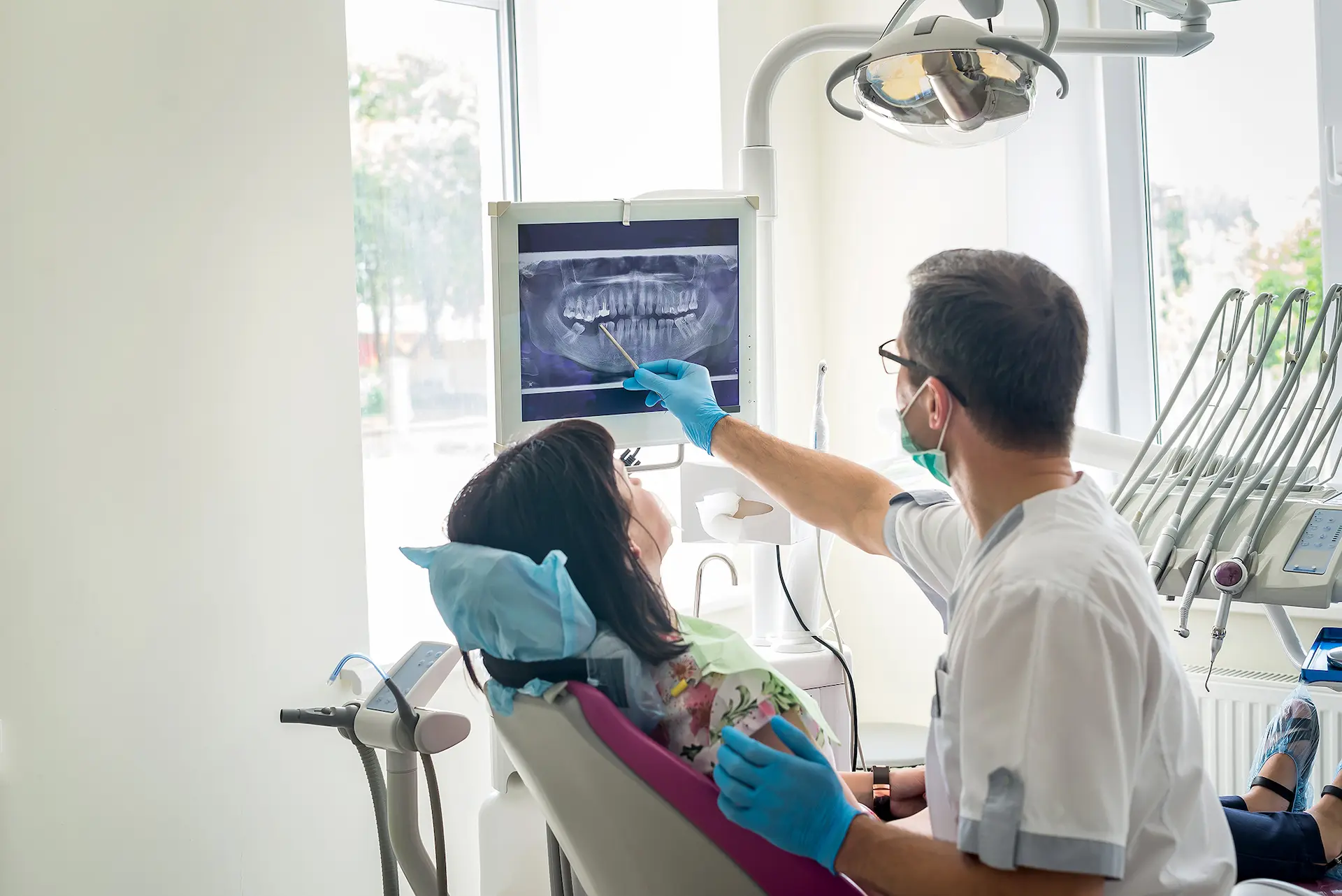
Diagnostic evaluation. Clinical exam, CBCT imaging, panoramic imaging, and review of treatment history. We map what has been damaged, what is stable, and what is at risk.
Conservative management of stable damage. Not all damage requires intervention. Some areas of bone change are stable and best left alone. We monitor with serial imaging and address only what genuinely needs attention.
Site preparation for future implants. When implants are planned in compromised bone, we may use bone grafting, ridge augmentation, or other techniques to prepare the site. Approaches differ in survivors versus healthy patients, radiated bone, for example, accepts grafts differently and requires modified protocols.
Sequestrectomy. Removal of separated bone fragments (sequestra) when they are present, often a key step in allowing surrounding tissue to heal.
Coordination with oral and maxillofacial surgery. For extensive jaw damage requiring hospital-based care, major debridement, free-flap reconstruction, complex grafting, we work with surgical teams. Our role often includes the prosthetic and restorative phases that follow surgical reconstruction.
Hyperbaric oxygen therapy (HBO) coordination. When indicated for ORN management or pre-implant preparation in heavily radiated bone.
Implant planning that respects damaged anatomy. Implants in compromised bone require careful site selection, sometimes the use of zygomatic implants when standard sites are not available, and modified surgical and prosthetic approaches.
Long-term surveillance. Patients with prior jaw damage need ongoing monitoring for new or progressing changes.
Working With Surgical Oncology and OMFS
Major jaw reconstruction often involves multiple specialists:
- Oral and maxillofacial surgery for surgical management of damaged or missing bone
- Plastic and reconstructive surgery when free-flap reconstruction is needed (e.g., fibula grafts to rebuild large segments of jaw after cancer resection)
- Surgical oncology for survivors still under cancer surveillance
- Hyperbaric medicine for adjunctive HBO therapy when appropriate
We do not duplicate the work of these specialists. Our role is the dental and prosthetic side: planning the eventual restoration, providing implants and prosthetics that work with what surgery has rebuilt, and managing the long-term dental care of survivors who have been through major reconstruction.
When Reconstruction Is Possible
Most jaw bone damage is partially or fully reconstructable, with the right combination of approaches. Patterns we see commonly:
- Localized bone loss at a single site can often be managed with grafting and a single implant
- Larger ridge atrophy (long-term denture wearers, post-extraction bone loss) often responds to bone augmentation procedures and subsequent implant placement
- Stable, healed ORN sites can sometimes accept implants with HBO support
- Post-surgical defects rebuilt by prior free-flap surgery often accept implants placed into the grafted bone
- Severely compromised anatomy sometimes still allows reconstruction using zygomatic implants or other advanced techniques
The patients we cannot help are the small minority where active disease, severe medical compromise, or extensive damage make any reconstruction unsafe. We will give you our honest assessment.
Special Considerations
Radiated bone. Healing differently than non-radiated bone. Implant placement, grafting, and surgical procedures all need adapted protocols.
MRONJ-affected sites. Often best managed conservatively first. Surgical intervention is reserved for cases where conservative care is insufficient.
Active disease. Reconstruction generally waits until any active osteonecrosis or infection is stabilized.
Combined effects. When multiple causes of jaw damage coexist, planning becomes more complex but is still usually possible.
Frequently Asked Questions
Lorem ipsum dolor sit amet, consectetur adipiscing elit. Suspendisse varius enim in eros elementum tristique. Duis cursus, mi quis viverra ornare, eros dolor interdum nulla, ut commodo diam libero vitae erat. Aenean faucibus nibh et justo cursus id rutrum lorem imperdiet. Nunc ut sem vitae risus tristique posuere.
My jaw was rebuilt with bone from my leg. Can I get implants in it?
Often yes. Free-flap reconstructions (fibula, scapula, others) typically accept implants well after appropriate healing. Planning involves coordination with the surgical oncology and reconstructive teams.
I have areas of exposed bone in my mouth. Can they be treated?
Often yes, depending on the cause and extent. Treatment ranges from conservative management to surgical care. See osteonecrosis for details.
Do I need bone grafting before implants?
Sometimes. It depends on bone quality and quantity at the planned implant sites, and on your overall situation. We will explain the specific recommendation for your case.
Is hyperbaric oxygen therapy painful or risky?
HBO is generally well tolerated. Sessions typically last 90 minutes and occur in a pressurized chamber. There are some medical contraindications and side effects, which we discuss when HBO is being considered.
How long does jaw reconstruction take?
Highly variable. Localized bone grafting plus implant might be 6 to 12 months. Major reconstruction following surgical oncology can take 18 to 24 months or longer when staged carefully.
Speak With a Dental Oncologist
Whether you are weeks into treatment or decades past it