Treatment for Oral Complications After Cancer
Cancer treatment can cause specific oral complications that need specialized care to manage. Two of the most consequential are osteoradionecrosis (ORN) and medication-related osteonecrosis of the jaw (MRONJ/BRONJ). Both involve damage to the jawbone, both can develop years after the original treatment or medication, and both require careful management to prevent worsening.
This page focuses on the diagnosis and management of these surgical-medical complications. For detailed information on the conditions themselves, see our osteonecrosis page.

What These Conditions Are
Osteoradionecrosis (ORN) is bone death in the jaw caused by reduced blood flow following head and neck radiation. It can be triggered by an extraction, an infection, or sometimes occurs spontaneously, often years after radiation completed. Exposed, non-healing bone is the hallmark.
Medication-related osteonecrosis of the jaw (MRONJ): sometimes called BRONJ when caused by bisphosphonates specifically, is bone death related to certain medications. The most common culprits are bisphosphonates (Zometa, Reclast, Aredia, Bonefos), denosumab (Xgeva, Prolia), and anti-angiogenic drugs. Risk depends on the medication, dose, duration, and whether oral surgery has occurred.
Both conditions can present as:
- Exposed bone in the mouth that does not heal
- Persistent pain in the jaw
- Loose teeth or non-healing extraction sites
- Drainage, infection, or fistulae
- Visible bone fragments separating (sequestration)
Why Specialized Care Matters
These conditions are not common in the general population, and most general dentists encounter very few cases. Treatment decisions matter:
- The wrong intervention (aggressive surgical debridement of stable ORN, for example) can worsen the condition
- The right intervention (conservative management, targeted antibiotics, careful sequestrectomy when needed) can stabilize or resolve it
- Some cases need referral to specialized hospital-based care; others can be managed in the office
A clinician who manages these conditions regularly is much more likely to make good decisions about which path applies to which patient.
What We Provide
For patients with diagnosed or suspected ORN or MRONJ, we offer:
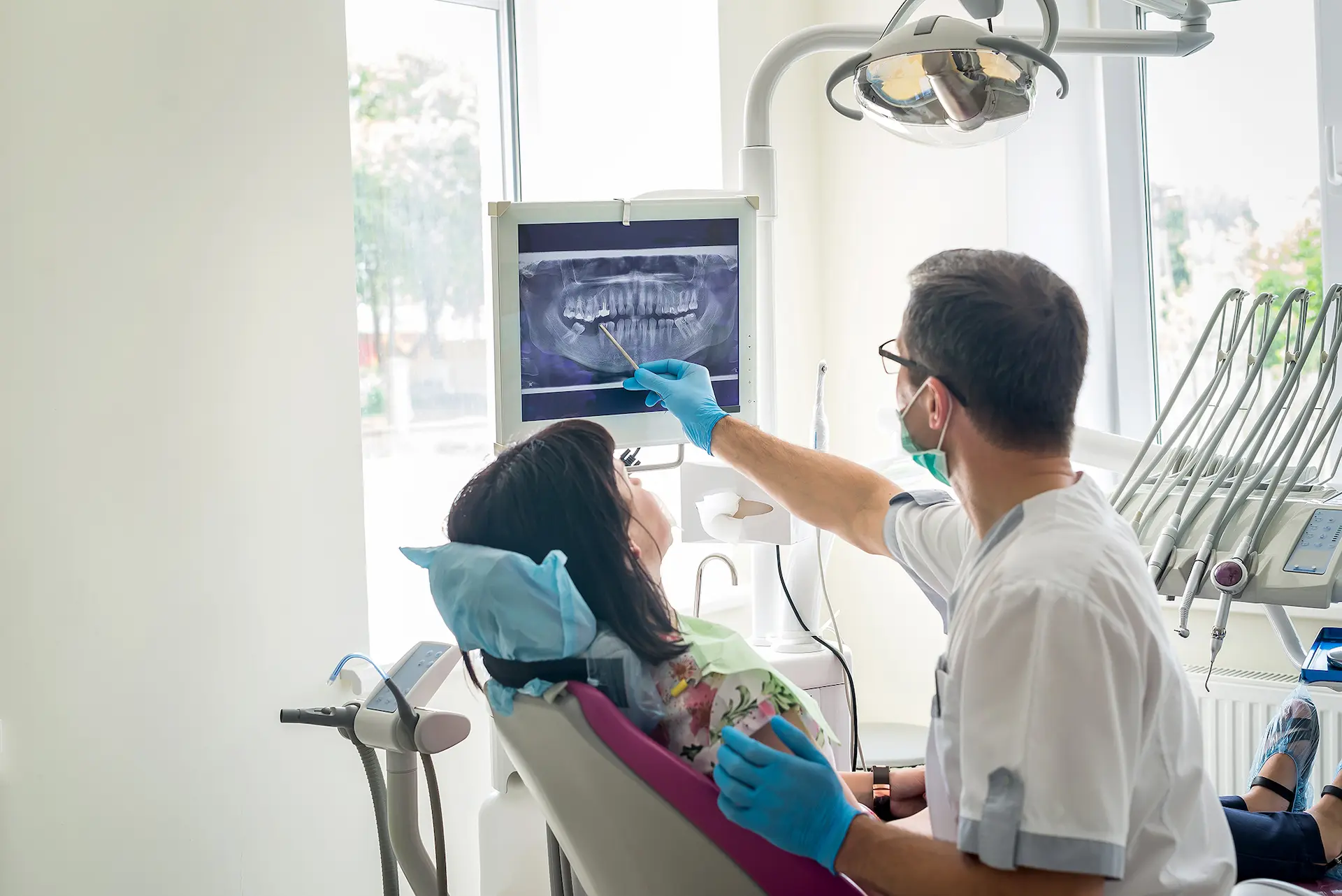
Diagnosis and staging. Clinical exam, panoramic and CBCT imaging, and review of medical and treatment history. We follow established staging criteria for both conditions.
Conservative management. Antimicrobial mouth rinses (typically chlorhexidine), targeted antibiotics when infection is present, and careful monitoring. Many cases stabilize with conservative care.
Sequestrectomy when needed. Removal of separating bone fragments, sometimes a key step in allowing healing.
Surgical management of advanced cases. When conservative care is not enough, careful surgical intervention may be needed. We coordinate with oral and maxillofacial surgeons or hospital-based teams for complex cases.
Hyperbaric oxygen therapy (HBO) coordination. For selected ORN cases, HBO may be used adjunctively before surgical procedures to support bone healing. We coordinate referrals when appropriate.
Long-term surveillance. Both conditions can recur or progress. We follow patients closely with periodic exams and imaging.
Prevention for at-risk patients. Patients about to begin bisphosphonates or denosumab benefit from a dental clearance before therapy starts. Patients with prior radiation benefit from preventive care that minimizes future need for extractions. We provide both.
Working With Your Medical Team
These conditions sit at the boundary of medicine and dentistry, and management often involves:
- The medical oncologist managing your bisphosphonate or denosumab therapy
- The radiation oncologist who treated your original cancer
- The surgical oncologist or oral surgeon, if hospital-based intervention is needed
- The infectious disease team in cases of secondary infection
We routinely coordinate with these clinicians. For patients with active or progressing disease, the team-based approach often makes the difference between stable and worsening outcomes.
Frequently Asked Questions
I have exposed bone in my mouth that has not healed. Should I be worried?
Yes, you should have it evaluated promptly. Exposed bone that has not healed for more than 8 weeks meets one of the diagnostic criteria for osteonecrosis and warrants specialized care. Earlier intervention is generally better.
Can osteonecrosis be cured?
Some cases stabilize and even resolve with conservative management. Others persist as chronic conditions managed over time. Outcomes depend on stage, location, contributing medications, and individual healing.
I am about to start a bisphosphonate. Should I see a dentist first?
Yes. A dental clearance before bone-modifying drug therapy is one of the most effective ways to reduce future MRONJ risk. We can do this in 1 to 2 visits.
My dentist wants to extract a tooth. I had radiation 10 years ago. Is it safe?
It might be, but it should not be done without specialized planning. Get a consultation with a clinician familiar with osteoradionecrosis risk before any extraction in radiated bone.
Speak With a Dental Oncologist
Whether you are weeks into treatment or decades past it